Email List Building for Small Businesses
Nov 30, 2025
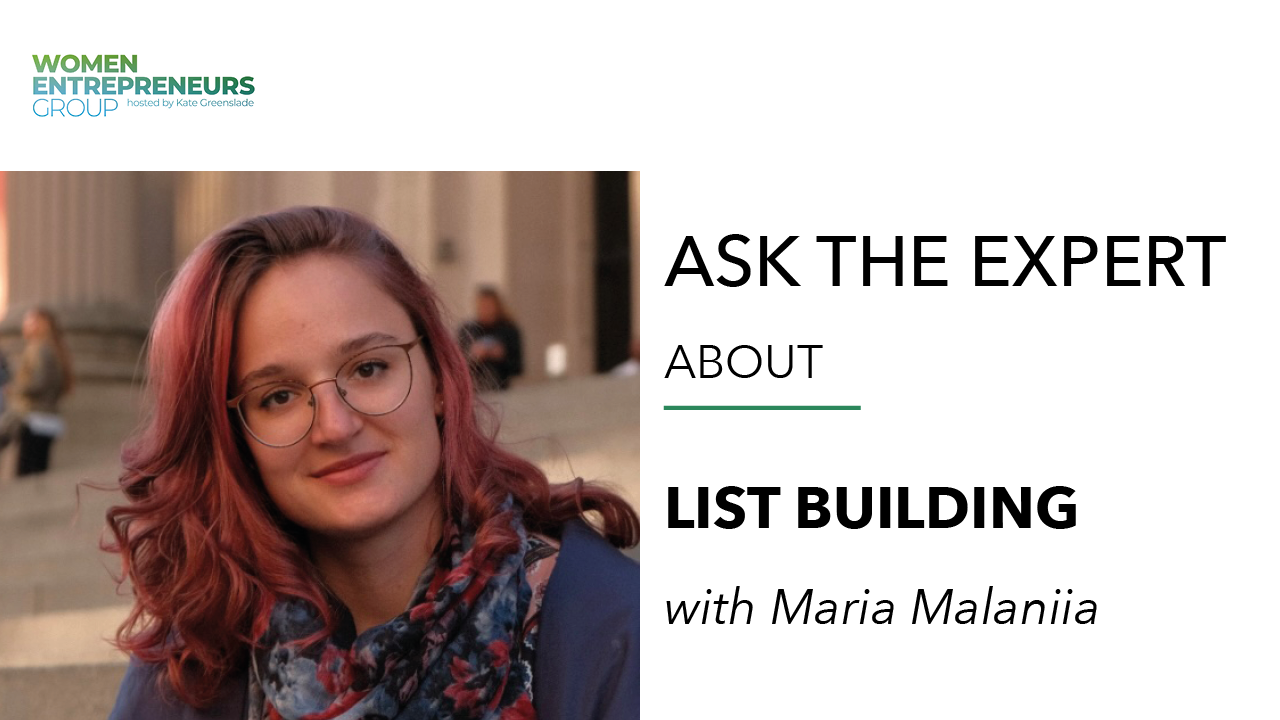
In our latest Ask The Expert session on list building with email strategist Maria Malaniia, we talked about what makes email marketing feel overwhelming, and how to make it simpler, calmer and more sustainable for small and micro businesses.
Here is a recap of the session which includes how to keep it simple, sustainable and actually working for you.
The Essential Foundations
Before Maria even talked about platforms and strategy, she named two things that really keep her going as an entrepreneur.
❤️ A supportive home life and partnership
💻 Really knowing how she works best
That might sound unrelated to email list building, but if you’re exhausted, overwhelmed and constantly doubting yourself, no tool will feel easy.
If you understand your energy, your focus patterns and what helps you stay consistent, then the systems you build will actually support you.
So as you read these practical steps, keep those two questions in the back of your mind.
* What kind of support do I have or need?
* How do I work best and how can I honour that?
The tech is just the third layer.
Start With Why, Not With Software
Most people begin with asking “What email platform should I use”
Maria invited us to start one step earlier. Ask first:
* Why am I using email at all
* What is in it for me
* What is in it for them
For you, an email list might be:
* A more stable way to reach people than social media
* A quieter space to nurture relationships over time
* A way to sell services or digital products without shouting online
For your subscribers it might be:
* Practical support and ideas that genuinely help
* A place to feel seen and understood in their challenges
* Access to special invitations or deeper teachings
That exchange of value is the heart of your list. Once that is clear, the choices about tools become simpler.
Choosing an Email Platform with Confidence
Maria’s three pillars.
When you are ready to choose an email service provider, instead of hunting for the perfect tool, use this no jargon checklist.
🏛️ PILLAR 1: Your Number One Criteria
Ask yourself: What matters most to me when I choose between two similar platforms. It could be:
* Ease of use
* Automation options
* Design and templates
* Cost at different list sizes
Decide your number one criteria before you get lost in feature lists. That becomes your compass when everything looks the same.
🏛️ PILLAR 2: Native Integrations
Look at what you already use.
* Website builder
* Calendar or booking tool
* Payment processor such as Stripe
* Customer relationship tool if you have one
Which email platform already has a simple connection to those
Native integrations usually mean you can connect things inside a few clicks, without extra software in between. That saves you time, energy and troubleshooting later.
🏛️ PILLAR 3: Budget Now and Later
Free plans are tempting, and they can absolutely be a good way to start.
Just keep one eye on the future.
* What happens to the price once your list grows
* Are essential features like automation locked behind higher tiers
* Will it feel painful to pay that amount once you have more subscribers
You want a platform that feels affordable to grow with, not one that becomes a shock when you hit a certain number.
What not to do when choosing a platform
Maria also offered some gentle warnings.
* Do not pick something thinking “I’ll just change later.”
Migration is possible, but it is work. You need to move your list, your templates, your automations and set all the security records again. The bigger your list, the bigger the job.
* Do not go straight for the biggest enterprise tool just because you are scared of changing later. If the price jumps fast and you are not seeing a return yet, it will simply add pressure.
* Do not jump between platforms quickly.
Give one system time to work for you. Every change also means a change in sender reputation, and your emails may go through an adjustment period.
A Simple Steady Growth Plan For Your List
You don’t need a complicated funnel. You need a few steady habits that you repeat.
Cover the Basics
Make the newsletter easy to find.
* Put your sign up form on every main page of your website and in the footer
* Add the link to your Instagram, LinkedIn and other profiles
* Add it to your normal email signature
Make the value very clear so it feels like an obvious yes to sign up.
Talk About it Regularly
* Mention your newsletter on social at least once a week
* Share a taste of what people get, then invite them to join
Remember, most people do not see all your posts, so you will need to talk about it more often than feels natural to you.
Use Lead Magnets Wisely
A lead magnet is simply a focused piece of value that people receive when they sign up. To keep this simple:
* Start with one good lead magnet that truly helps
* Make sure it matches what you send in your newsletter and what you offer as services
* When you are ready, you can create different lead magnets for people at different stages, for example:
- Just curious
- Actively exploring
- Ready to buy
Test different ideas and notice which one people actually sign up for and use.
Your Website as a Quiet Growth Engine
Once you have a lead magnet you love, do not hide it.
* Put it clearly on your home page
* Add sign up forms to relevant blog posts
* Use a gentle pop up if that feels right for your brand
Think of your site as a kind shop assistant who says,
“Here is something that might really help you, would you like it”
Reach New Audiences
Beyond your own platforms, you can grow your list by borrowing other people’s rooms. For example:
* Join bundle offers where several creators share resources
* Swap guest pieces with someone and write for their newsletter
* Ask your subscribers to share your newsletter with a friend
* Speak at events, on podcasts or inside communities and invite people to join your list at the end
And perhaps the simplest of all, tell people in person.
When someone is genuinely interested in your work, mention that you have a newsletter and offer to send them the link.
A 1 Hour A Week Email Workflow
Many women resist email because they imagine it will swallow all their time. Maria broke it down to something much more manageable.
Step 1: Choose Your Content Core
Decide where it feels easiest and most natural for you to create content consistently. For example:
* A weekly email
* A monthly blog
* A regular LinkedIn post
Make that your content core, then repurpose from there. You could:
* Write one blog post, split parts of it into three social posts, and turn another part into two emails
* Write one rich email, turn it into three social posts and expand part of it into a blog
The key idea is not to create something new from scratch for every channel. Start with one main piece and let it feed the rest.
Step 2: Keep Automations Simple and Low Maintenance
Automations are there to work quietly in the background, not to give you another thing to babysit.
Check them every few months to make sure:
* Links still work
* The information is still true
* The tone still sounds like you
You can also automate things that sit around email, such as:
* Reminders to yourself based on subscriber behaviour
* Updates to your contact lists if someone clicks on certain links
* Simple content repurposing with an AI tool to draft summaries or variations
Step 3: Create a Simple Welcome Sequence
This can be very straightforward.
For a standard newsletter:
1. Email one
Welcome and thank you for signing up
2. Email two
Who you are and why you do what you do
3. Email three
What they can expect from your newsletter and how often
For a newsletter that includes a lead magnet:
1. Email one
Deliver the lead magnet and welcome them
2. Email two
Share your story and the purpose behind your work
3. Email three
Gently remind them about the lead magnet and explain what you will send going forward
You can also add one extra automation.
If someone has not opened or clicked on the lead magnet, send a short reminder that points them back to it.
You Will Feel Repetitive Long Before Your Audience Does
Maria reminded us of something really important.
You will need to repeat your messages far more times than you feel comfortable with. You are the only person who sees every single email, post and article you create.
Most people see a tiny fraction.
Making the Tech and Deliverability Feel Safe and Simple
This is the bit that makes many people want to hide under the duvet.
The good news is, you do not have to become an expert. You just need to set up a few core things properly once, then keep an eye on them.
The One Rule That Keeps You Safe
Send emails to people who actually want to receive them.
Almost everything around deliverability and compliance comes back to that.
The Minimum Tech You Need in Place
In very simple terms, this is what you need.
1. Your own domain, rather than a general email like yourbusiness@gmail
2. That domain authenticated properly with your email platform
Your platform will give you some strange looking records to add to your domain settings. These are usually called SPF, DKIM and DMARC.
Think of them like this.
* SPF is the approved list of who is allowed to send emails as you
* DKIM is a little secret stamp that proves the email was not changed on the way
* DMARC is the rulebook that says what should happen if something looks suspicious
Once these are set up, inbox providers like Google can quickly check that you are genuine and not a spammer pretending to be you.
You can also add something called domain alignment, which simply means that when someone opens your email and looks at the details, it clearly shows that it is sent from your domain. It builds trust and looks professional.
Your email platform should walk you through all of this step by step.
Keeping your List Clean and Compliant
You don’t need to micromanage your list every day. A light weekly check and an occasional deeper tidy is enough for most solo businesses.
Weekly 5 Minute Check
Once a week, spend a few minutes to:
* Look at soft bounces
These are temporary delivery issues. If the same address soft bounces several times, it may turn into a hard bounce and you can remove it.
* Send a quick test email to yourself
Open it in different inboxes if you have them and check that it looks the way you intend.
You can also keep a small test group of your own email addresses, each following a slightly different path. That makes it easier to spot if an automation is not working properly.
Quarterly Deeper Tidy Up
Every couple of months, take a slightly wider look.
* Run a simple deliverability report with an online tool if you want reassurance
* Review your list and filter by activity, for example:
- Who hasn’t opened anything in the last few months
- Who clicks a lot
- Who has never opened anything
For people who appear inactive, consider sending a re engagement email rather than removing them immediately, especially if you email less often. After that, you can release the ones who still do not respond.
Consent and GDPR Explained
To stay on the safe side:
* Make sure people actively choose to sign up (no pre ticked boxes)
* Have a clear unsubscribe link in every email
* Honour unsubscribes quickly
* Include your business name and address in the footer
You do not have to use double opt in to be compliant. It is optional. Maria recommended using it temporarily if your domain reputation is weak, then switching it off once things are stable to reduce friction.
Transactional Emails and Marketing Emails
It’s a good idea to separate emails that are about the running of your service from your marketing messages. For example:
* Receipt emails
* Booking confirmations
* Password reset emails
These are called transactional emails, and people need to receive them even if they unsubscribe from your newsletter.
One way to manage this is to use a separate subdomain for marketing emails so that your essential messages are not affected if someone unsubscribes from your general content.
If that feels too advanced right now, just keep the principle in mind.
Do not send important receipts or login details through the same system you use for your general newsletter if you can avoid it.
Learn to Love Unsubscribes
This bit can feel personal, especially when your list is still small.
Maria’s invitation was to think of unsubscribes as decluttering.
Someone has politely told you that your emails are not what they need. That is fine. They are helping you keep your list clean, your reputation healthy and your energy focused on people who are genuinely interested.
You can even imagine yourself thanking them quietly and tidying them away like you would a jumper that no longer fits.
CHECK LIST
To avoid feeling stressed when building an email list, here's a check list:
📧 Understanding how you work and what supports you
📧 Being clear about the value you offer and the promise you are making
📧 Choosing a platform that fits your needs, your tools and your budget
📧 Growing slowly and steadily through simple habits
📧 Keeping the tech side safe so your emails can arrive
You don’t need to get everything perfect at once.
Start small, send something with a human touch and that’s helpful, and learn as you go.
If you’re navigating this in your business, you don’t have to do it alone.
→ You can try the group for 7 days here:
https://www.thewomenentrepreneursgroup.com/offers/f6LnacBi